


 Top Rated Course

We may not have the course you’re looking for. If you enquire or give us a call on 01344203999 and speak to our training experts, we may still be able to help with your training requirements.
What is Script Writing? Definition, Types, and Process
The Knowledge Academy 04 February 2026Wondering What is Script Writing? It involves creating scripts for films, TV, and media, using dialogue and actions to shape the story and guide production. It is all about bringing stories to life in a way that feels real and engaging. A good script keeps the audience hooked, whether it is a movie, a TV show, or even a short video.

Training Outcomes Within Your Budget!
We ensure quality, budget-alignment, and timely delivery by our expert instructors.
Table of Contents

Ever watched a movie and felt completely lost in the story, as if you were right there with the characters? That is the power of Script Writing! It is what makes your favourite films, TV shows, and even short videos come to life. Every scene, every line of dialogue, and every dramatic pause starts with a script. Want to learn more about What is Script Writing and how it shapes the world of Storytelling? This blog has all the answers.
Table of Contents
1) What is Script Writing?
2) Types of Script Writing
3) Script Writing Process
4) Tips for Script Writing
5) Script Writer Roles & Responsibilities
6) What are Script Writing Skills
7) What are the Key Differences Between Screenwriting & Script Writing
8) Conclusion
What is Script Writing?
Script Writing is all about visuals. Movies, TV, and video games rely on what we see, not just what we read. Unlike books or poems, scripts must show a character’s emotions, not just tell them. Instead of saying, “It reminded her of childhood,” a script might use a flashback or a meaningful action.

Types of Script Writing
Script Writing covers different visual mediums and job roles. There are many types of Script Writers, and each one has a unique job in the industry. While most Script Writers work as freelancers, experienced writers may get contracts with studios or production companies. Here are some common Script Writers roles:
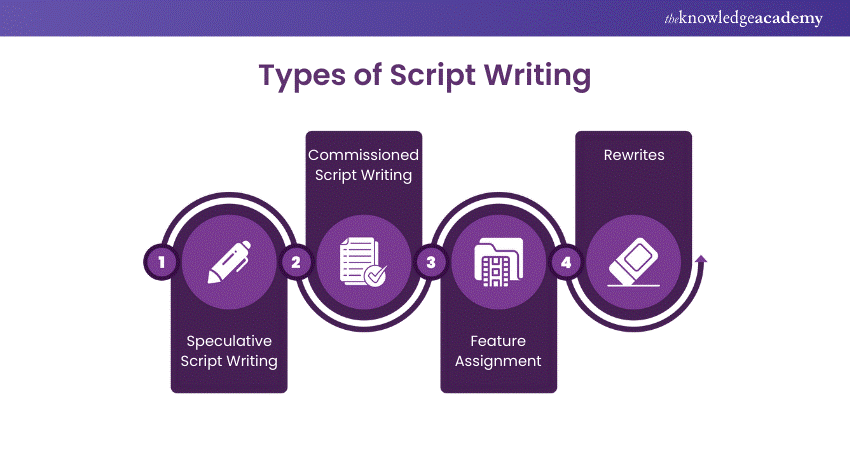
Speculative Script Writing
This is the most common type of Script Writers. Spec scripts are written independently, without being hired by a studio. The writer creates a story, though it doesn’t always have to be original. It can be based on public domain stories or real events. However, only a small percentage of spec scripts get converted into movies.
Commissioned Script Writing
Commissioned scripts are created when a writer is hired to develop an existing idea. These are usually based on books, games, or other Intellectual Property (IP) that already have an audience. Often, multiple writers work on the same project over time.
Feature Assignment
This is the dream job for many Script Writers. A writer is contracted by a studio or producer to create a script, often based on existing IP. These jobs are rare and usually go to well-established writers. Getting a feature assignment also means being part of a trusted group of industry professionals.
Rewrites
Almost every movie script goes through rewrites, often by writers who weren’t part of the original project. Rewriting is a huge part of the film industry. There are many writers who make a living by improving, polishing, or completely reworking existing scripts.
Be one step ahead of the competition through our Active Listening Training - Sign up today!
Script Writing Process
Writing a script includes several key steps. Here is how it all comes together:
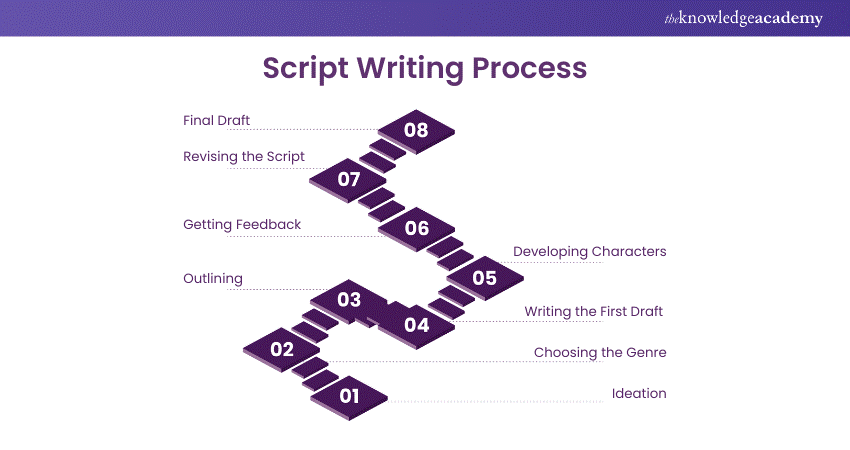
1) Ideation
Every script starts with an idea. Writers brainstorm characters, themes, and stories that connect with their Target Audience.
2) Choosing the Genre
The writer decides the best genre for their story. It can be a comedy, thriller, drama, or something else. This helps shape the tone and style of the script.
3) Outlining
Every writer must create a roadmap before writing their dream story. They can outline key scenes, character journeys, and the overall story structure.
4) Writing the First Draft
Now, the script takes shape! Writers bring their outlines to life by adding scenes, dialogue, and character interactions.
5) Developing Characters
Strong characters make a great story. Writers give them unique personalities, goals, and backstories to make them feel real.
6) Getting Feedback
Sharing the script with mentors or industry professionals is a great idea. It helps identify what is working and what needs improvement.
7) Revising the Script
Based on feedback, writers go through multiple drafts. They refine the story, improve dialogue, and make everything flow better.
8) Final Draft
After several rounds of revision, the script is polished and ready to be pitched to producers or studios.
Script Writing is all about creativity and persistence. The more you refine your work, the stronger your script will be!
Improve your Customer Service Standards through our Personal Development Courses - Join now!
Tips for Script Writing
If you are looking to start a career in Script Writing, here are some useful tips to help you along the way:
Read a Diverse Range of Scripts
Reading scripts from different genres and formats can help you understand various writing styles. Check out scripts for movies, TV shows, and theatre plays to see how Professional Development structures their work.
Seek Mentorship
Many new writers start by assisting experienced scriptwriters. You can help with research or small tasks while learning from their experience. Talking to seasoned writers and getting their advice can give you valuable insights into the industry.
Participate in Workshops
Workshops are a great way to improve your skills and meet others in the industry. They also help you get used to working with a team, which is important in Script Writing.
Identify Your Preferred Genres
Different genres have different writing styles. Figure out which ones interest you the most so you can focus on developing your skills in that area.
Consider the Tone of the Script
The tone of your script should match the type of story you are telling. For example, an action film needs an energetic tone, while a slow drama might have a more serious, emotional feel.
Practice Perseverance
Script Writing takes patience and practice. You may have to rewrite your script many times before it is ready for producers. Be prepared to make changes and keep going even when it gets tough.
Seek Feedback
When writing a script, it is helpful to get feedback from others in the industry. They can give you useful advice on what is working and what needs improvement. This will help you grow and make your script even better.
Learn how to maximise your potential and lead a more fulfilling life with our Personal Development Courses – Join now!
Script Writer Roles & Responsibilities
As a Script Writer, you will have several responsibilities to fulfil. Want to know what they are? Let’s explore it below:
a) Turn stories into scripts for different formats
b) Write interesting dialogue and action scenes
c) Work with directors and help actors with their roles
d) Research details to make the story feel real

What are Script Writing Skills?
A great scriptwriter needs Types of Creative Writing and technical skills. Use visual storytelling, adapt to different formats, and write non-linear stories for interactive media. Create deep characters to make stories engaging. Collaborate with technical teams to ensure the script fits smoothly into the final production.
What are the key Differences Between Screenwriting & Script Writing?
Both tell stories but differ in key ways. Screenplays follow strict formats, focusing on visuals and teamwork with directors. Script Writing is more flexible, emphasising dialogue and individual creativity. Script Writing is for films/TV, while Script Writing includes games, radio, and interactive media. Understanding these differences is crucial for those exploring to How to Became Film Director.
Conclusion
Understanding What is Script Writing is important if you are considering a career in this field. Script Writers create work across different mediums like film, TV, and video games. A script is the foundation of any great story. Every screenplay starts as a script, ready to come to life. So, start writing and share your story!
Do you want to learn how to handle creative writing challenges? Join our Creative Writing Course today!
Frequently Asked Questions
What are the Challenges of Script Writing?

Script Writing comes with many challenges. Writers must create engaging stories, realistic dialogue, and strong characters. Sticking to the proper script format is crucial. Meeting deadlines and handling feedback can be tough. Plus, breaking into the industry takes patience, persistence, and a lot of rewriting!
What are the 3 Cs in Script Writing?
Script Writing comes with many challenges. Writers must create engaging stories, realistic dialogue, and strong characters. Sticking to the proper script format is crucial. Meeting deadlines and handling feedback can be tough. Plus, breaking into the industry takes patience, persistence, and a lot of rewriting!
What are the Other Resources and Offers Provided by The Knowledge Academy?
The Knowledge Academy takes global learning to new heights, offering over 3,000+ online courses across 490+ locations in 190+ countries. This expansive reach ensures accessibility and convenience for learners worldwide.
Alongside our diverse Online Course Catalogue, encompassing 19 major categories, we go the extra mile by providing a plethora of free educational Online Resources like Blogs, eBooks, Interview Questions and Videos. Tailoring learning experiences further, professionals can unlock greater value through a wide range of special discounts, seasonal deals, and Exclusive Offers.
What is The Knowledge Pass, and How Does it Work?
The Knowledge Academy’s Knowledge Pass, a prepaid voucher, adds another layer of flexibility, allowing course bookings over a 12-month period. Join us on a journey where education knows no bounds.
What are the Related Courses and Blogs Provided by The Knowledge Academy?
The Knowledge Academy offers various Personal Development Courses, including Creative Writing Course, Active Listening Training, and Dealing with Difficult People Training. These courses cater to different skill levels, providing comprehensive insights into How to Stop Overthinking.
Our Business Skills Blogs cover a range of topics offering valuable resources, best practices, and industry insights. Whether you are a beginner or looking to advance your script skills, The Knowledge Academy's diverse courses and informative blogs have you covered.

The Knowledge Academy


Global Training Provider
The Knowledge Academy is a world-leading provider of professional training courses, offering globally recognised qualifications across a wide range of subjects. With expert trainers, up-to-date course material, and flexible learning options, we aim to empower professionals and organisations to achieve their goals through continuous learning.

Upcoming Business Skills Resources Batches & Dates
Date
 Creative Writing Course
Creative Writing Course
Fri 10th Jul 2026
Creative Writing Course
Fri 2nd Oct 2026

 If you wish to make any changes to your course, please


